



Smart AI Coaching on a Budget: Why You Don’t Always Need an Agent
Everyone is obsessed with autonomous agents right now, but you don't always need one. Often, the better approach is to use AI to generate structured data up front, then let standard code handle the rest. Keep it simple: use AI to build the setup, and run simple logic at runtime.
To prove it, I built an AI movement coach that breaks down videos (like a tennis serve, dance move, or martial arts kata) into step-by-step interactive lessons. A live webcam coach then tracks your form and scores you as you practice.
I built the app using AI tools, but at runtime, it only makes a single call to Claude per new lesson (and even that can be skipped). Once a lesson is created, the system caches it and converts each movement into target joint angles. Plain math handles the scoring in real time. The result is fast, cheap, predictable, and simple.
In this talk, I'll walk through:
- Live demos of the coach in action
- My AI-assisted development workflow
- Practical strategies to keep runtime costs low
- Honest takeaways on when an agent is actually worth it versus when a single API call does the job
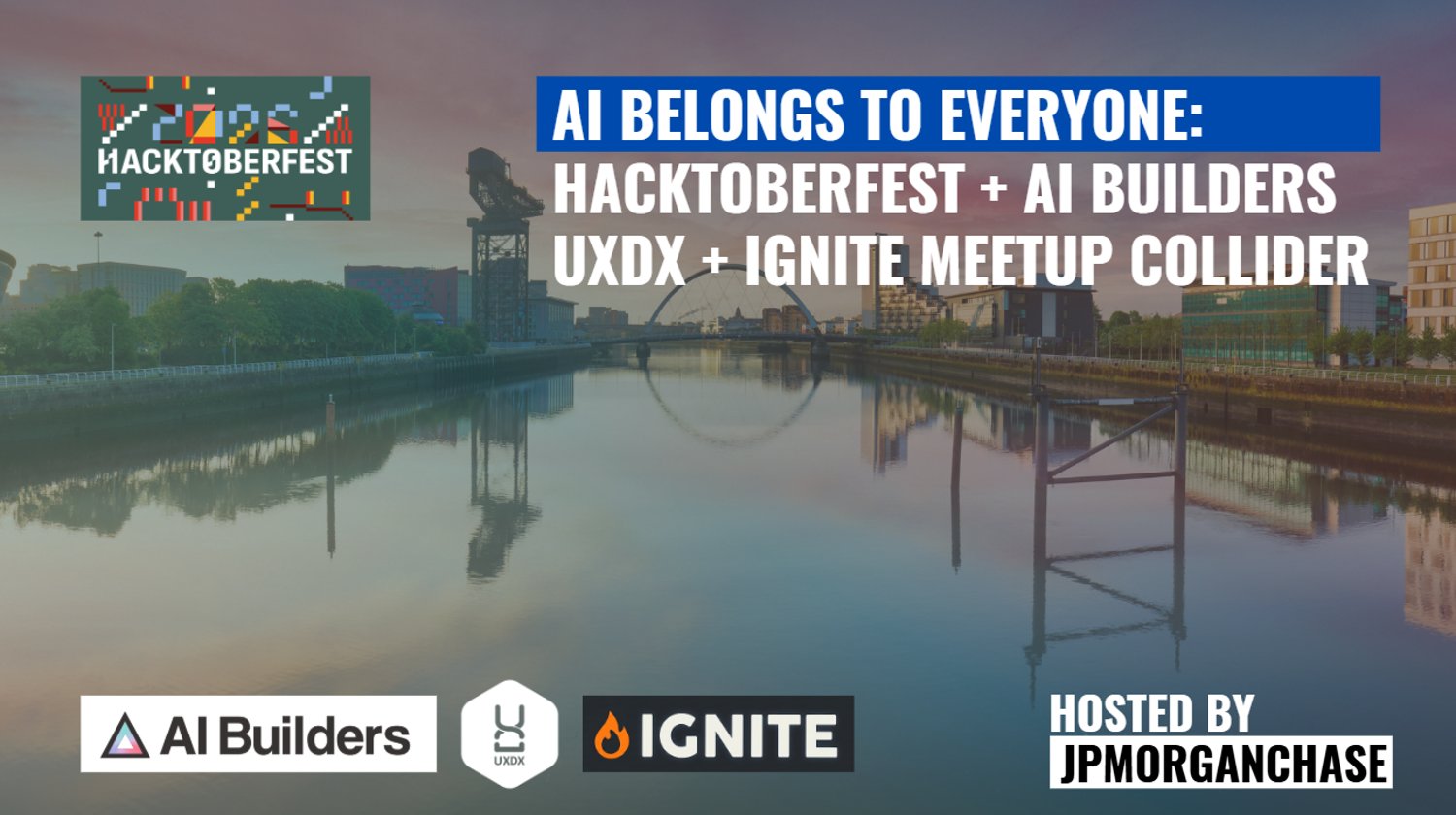


The Product Model Glasgow by UXDX
Contexts change, and processes should too.
The biggest waste in software development is building the wrong thing. But we continue to use processes that focus on the efficiency of building software instead of effectiveness and sustainability.
We don't know what customers will like until they have the product so we need to build processes around short cycles, quick experiments and iterations. That's what UXDX is all about.
We host speakers who share how they are changing their processes to enable more autonomous, empowered product teams. The goal is for everyone involved in product development from Product Managers, UX Researchers, Designers and Developers to get involved and learn the T-shaped skills necessary for high-performing product teams.




Platform Sponsors

Supercharge your dev team with AI code reviews
Get your free trial now

Torc is a community-first platform bringing together remote-first software engineer and developer opportunities from across the globe. Join a network that’s all about connection, collaboration, and finding your next big move — together.
Join our community today!
Smart AI Coaching on a Budget: Why You Don’t Always Need an Agent
Everyone is obsessed with autonomous agents right now, but you don't always need one. Often, the better approach is to use AI to generate structured data up front, then let standard code handle the rest. Keep it simple: use AI to build the setup, and run simple logic at runtime.
To prove it, I built an AI movement coach that breaks down videos (like a tennis serve, dance move, or martial arts kata) into step-by-step interactive lessons. A live webcam coach then tracks your form and scores you as you practice.
I built the app using AI tools, but at runtime, it only makes a single call to Claude per new lesson (and even that can be skipped). Once a lesson is created, the system caches it and converts each movement into target joint angles. Plain math handles the scoring in real time. The result is fast, cheap, predictable, and simple.
In this talk, I'll walk through:
- Live demos of the coach in action
- My AI-assisted development workflow
- Practical strategies to keep runtime costs low
- Honest takeaways on when an agent is actually worth it versus when a single API call does the job
The Product Model Glasgow by UXDX
Contexts change, and processes should too.
The biggest waste in software development is building the wrong thing. But we continue to use processes that focus on the efficiency of building software instead of effectiveness and sustainability.
We don't know what customers will like until they have the product so we need to build processes around short cycles, quick experiments and iterations. That's what UXDX is all about.
We host speakers who share how they are changing their processes to enable more autonomous, empowered product teams. The goal is for everyone involved in product development from Product Managers, UX Researchers, Designers and Developers to get involved and learn the T-shaped skills necessary for high-performing product teams.
Platform Sponsors
Supercharge your dev team with AI code reviews
Get your free trial now
Torc is a community-first platform bringing together remote-first software engineer and developer opportunities from across the globe. Join a network that’s all about connection, collaboration, and finding your next big move — together.
Join our community today!
Get in touch!
hi@guild.host